
Where Is The TPMS Button On A Kia Sportage?
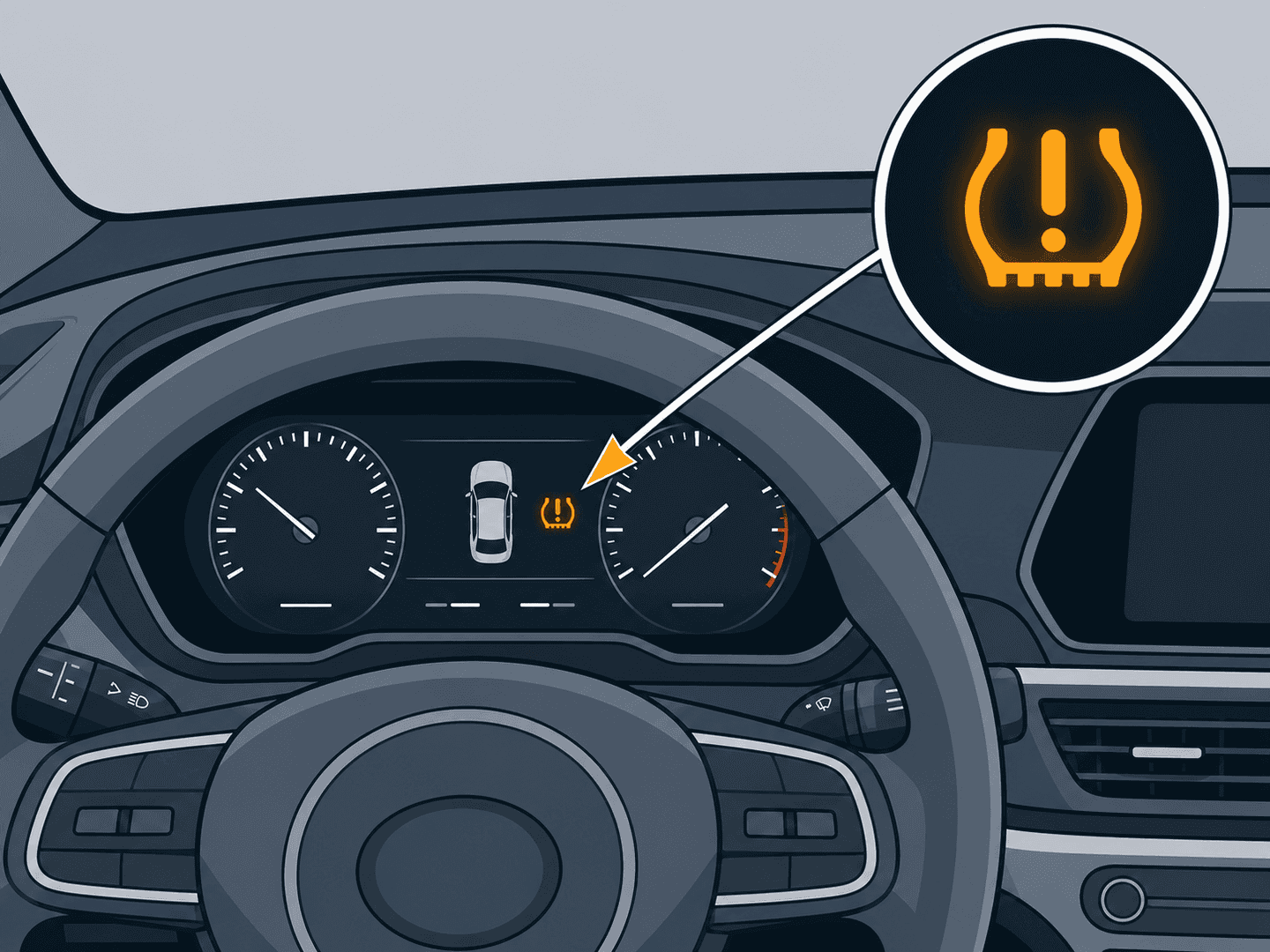
Many Kia Sportage models do not have a separate TPMS reset button. After you inflate each tire to the pressure shown on the driver-side door-jamb label, the system may update automatically as you drive.
Some Sportage versions or international-market models may include a TPMS SET button. Because the procedure varies by year and configuration, check your owner’s manual before searching beneath the dashboard or inside the glovebox.
Important: Never reset or dismiss a tire-pressure warning before checking all four tires with an accurate pressure gauge.
Key Takeaways
- Not every Kia Sportage has a dedicated TPMS reset button.
- Begin by checking the cold tire pressure shown on the driver-side door-jamb label.
- The light may turn off after the tires are corrected and the vehicle is driven.
- A light that flashes before remaining on usually indicates a TPMS malfunction.
- Check the owner’s manual for instructions specific to your model year and trim.
Where Is the Kia Sportage TPMS Reset Button?
Quick Answer: A universal Kia Sportage TPMS reset-button location does not exist. Many recent U.S.-market Sportage models rely on the sensors to update after the tires are inflated correctly.
A model equipped with a physical TPMS SET button may place it in the lower driver-side dashboard area. However, owners should not assume that an unlabeled dashboard switch, steering-wheel control, or infotainment menu resets the system.
Kia’s current Sportage guidance instructs drivers to inflate the tires to the specification listed on the driver-side door jamb. The TPMS warning should then turn off once the system detects the corrected pressure.
Certain Kia models sold in other markets use a dedicated TPMS SET button. Kia documentation for those vehicles instructs the driver to hold that button for about three seconds and then drive while the system stores the pressures. That procedure should only be used when the applicable Sportage manual confirms it.
How Do You Perform a Kia Sportage TPMS Reset?
Quick Answer: Correct the pressure first. Most TPMS warnings should never be cleared without inspecting the tires.
Follow these steps:
- Park on a level surface.
Allow the vehicle to sit long enough for the tires to cool. The manufacturer’s recommended PSI normally refers to cold tires. - Find the pressure specification.
Open the driver’s door and locate the tire-information label on the door jamb. Do not use the maximum pressure printed on the tire sidewall. - Check all four tires.
Use an accurate tire-pressure gauge. A visual inspection alone cannot reliably identify moderate underinflation. - Inflate each tire correctly.
Adjust every tire to the specification on the vehicle label. Different front and rear specifications may apply on some vehicles. - Inspect for damage.
Look for a nail, cut, sidewall bulge, damaged valve stem, or other visible problem. - Start and drive the vehicle.
The instrument-cluster reading may require a brief period of driving before it updates. Kia documentation notes that tire-pressure information may appear after the vehicle begins moving. - Use the TPMS SET button only when applicable.
When your Sportage manual specifically shows a reset button, follow that manual’s sequence. Do not rely on instructions for another Kia model.
Scenario Example: The Light Appears After a Cold Night
Suppose your Sportage is parked overnight during a sharp Rochester temperature drop. The TPMS light appears the next morning, but no tire looks flat.
Check all four tires while they are cold. Adjust them to the door-jamb specification rather than adding an arbitrary amount of air. Temperature changes can affect pressure, but a puncture or leak must still be ruled out.
Scenario Example: The Light Remains On After Adding Air
Suppose you add air at a gas station, yet the light stays on. One tire may still be below specification, or the station’s gauge may be inaccurate.
Recheck every tire with a reliable gauge after the tires cool. If the indicator flashes for about one minute before staying on, the problem may involve the monitoring system rather than tire pressure alone.
What Does the Kia Sportage TPMS Light Mean?
TPMS means Tire Pressure Monitoring System. Sensors monitor tire pressure and warn the driver when one or more tires are significantly underinflated.
Federal TPMS requirements are designed to warn drivers when tire pressure has fallen substantially below the manufacturer’s recommended cold inflation pressure. NHTSA advises drivers to inspect the tires and check pressure promptly when the symbol appears. [Source: National Highway Traffic Safety Administration]
The dashboard indicator can communicate two different conditions.
Solid TPMS Light
A solid light usually means at least one tire is significantly underinflated.
Safely stop when possible, inspect the tires, and measure the pressure. Do not continue driving on a visibly flat tire.
Flashing TPMS Light
A light that flashes for approximately one minute and then remains illuminated generally indicates a TPMS malfunction. Kia’s Sportage guidance recommends service when this occurs. [Source: Kia Sportage Features and Functions Guide]
Possible causes include:
- A failed or depleted TPMS sensor
- A recently replaced wheel without a compatible sensor
- Sensor damage during tire installation
- A system communication problem
- Certain forms of electronic interference
- A spare wheel that lacks the expected sensor
How Do You View Tire Pressure on a Kia Sportage?
Some Kia Sportage instrument clusters can display the pressure of each tire.
Use the steering-wheel controls to open the instrument cluster’s information or assistance screen. The exact menu name can vary by model year.
The vehicle may display a message such as “Drive to display” while parked. Tire-pressure values commonly appear after the Sportage has been driven briefly.
The display may allow you to choose:
- PSI
- kPa
- Bar
The displayed pressure can differ slightly from a handheld gauge because temperature, driving conditions, gauge accuracy, and sensor tolerances affect the reading.
Why Does the TPMS Light Keep Coming Back?
A recurring light usually means the underlying pressure loss has not been resolved.
Common causes include:
- A slow puncture
A small nail may allow pressure to escape over several days. - A leaking valve stem
The valve or sensor seal may leak even when the tread appears undamaged. - Temperature changes
Pressure can drop as outside temperatures fall. - Wheel or bead damage
Corrosion, impact damage, or an improper seal can allow air to escape. - A faulty sensor
TPMS sensors can eventually fail or lose battery power. - Uneven tire wear
Persistent tire problems may also justify checking tire alignment and wear warning signs.
Do not repeatedly add air without finding the cause. A tire that loses pressure more than once should be inspected.
How Can You Prevent TPMS Problems?
Check tire pressure at least once a month and before long trips. Kia also advises manual pressure checks even when the vehicle has TPMS.
Use this routine:
- Check the tires when they are cold.
- Follow the driver-side door-jamb specification.
- Inspect the tread and sidewalls.
- Replace missing valve caps.
- Rotate the tires at the recommended interval.
- Tell the tire installer that the wheels contain TPMS sensors.
- Follow the recommended Kia maintenance schedule.
TPMS supports tire maintenance, but it does not replace regular inspections.
When Should You Schedule Kia Tire Service?
Arrange an inspection when:
- A tire is visibly flat or damaged.
- The warning returns soon after inflation.
- One tire loses pressure repeatedly.
- The indicator flashes before staying on.
- Pressure does not appear after driving.
- The light remains on even though all tires match the door-jamb specification.
- The warning began after a tire, wheel, or sensor replacement.
- Steering vibration or unusual tire wear is present.
Tom Kadlec Kia’s service team can inspect tire pressure, leaks, wheels, valve stems, and TPMS sensors.
Schedule Service | Kia Maintenance Schedule
Owners considering a newer SUV can also review 2026 Kia Sportage features.
Frequently Asked Questions
Does every Kia Sportage have a TPMS reset button?
No. Many Kia Sportage models do not use a dedicated reset button. Correct the tire pressure first, drive the vehicle, and consult the model-specific owner’s manual before attempting a manual reset.
How long does a Kia Sportage TPMS reset take?
The display or warning may update after a brief drive once all tires are inflated correctly. The exact time and driving conditions vary by model year and TPMS design.
Why is my TPMS light still on when the tires are full?
One tire may still be below the door-jamb specification, the pressure may have been checked while hot, or the system may need driving time to update. A flashing light can indicate a system malfunction.
Where is the correct Kia Sportage tire pressure listed?
The recommended cold tire pressure appears on the tire-information label inside the driver-side door jamb. The owner’s manual also includes tire-pressure information.
Can cold weather turn on the Kia Sportage TPMS light?
Yes. Falling temperatures can reduce tire pressure enough to trigger the warning. Check every tire with a gauge rather than assuming weather is the only cause.
Is it safe to drive with the TPMS light on?
You should inspect the tires and check pressure as soon as it is safe. Do not drive on a visibly flat or damaged tire. A flashing TPMS indicator should also be professionally diagnosed.


0 comment(s) so far on Where Is The TPMS Button On A Kia Sportage?